January Gem-Garnet
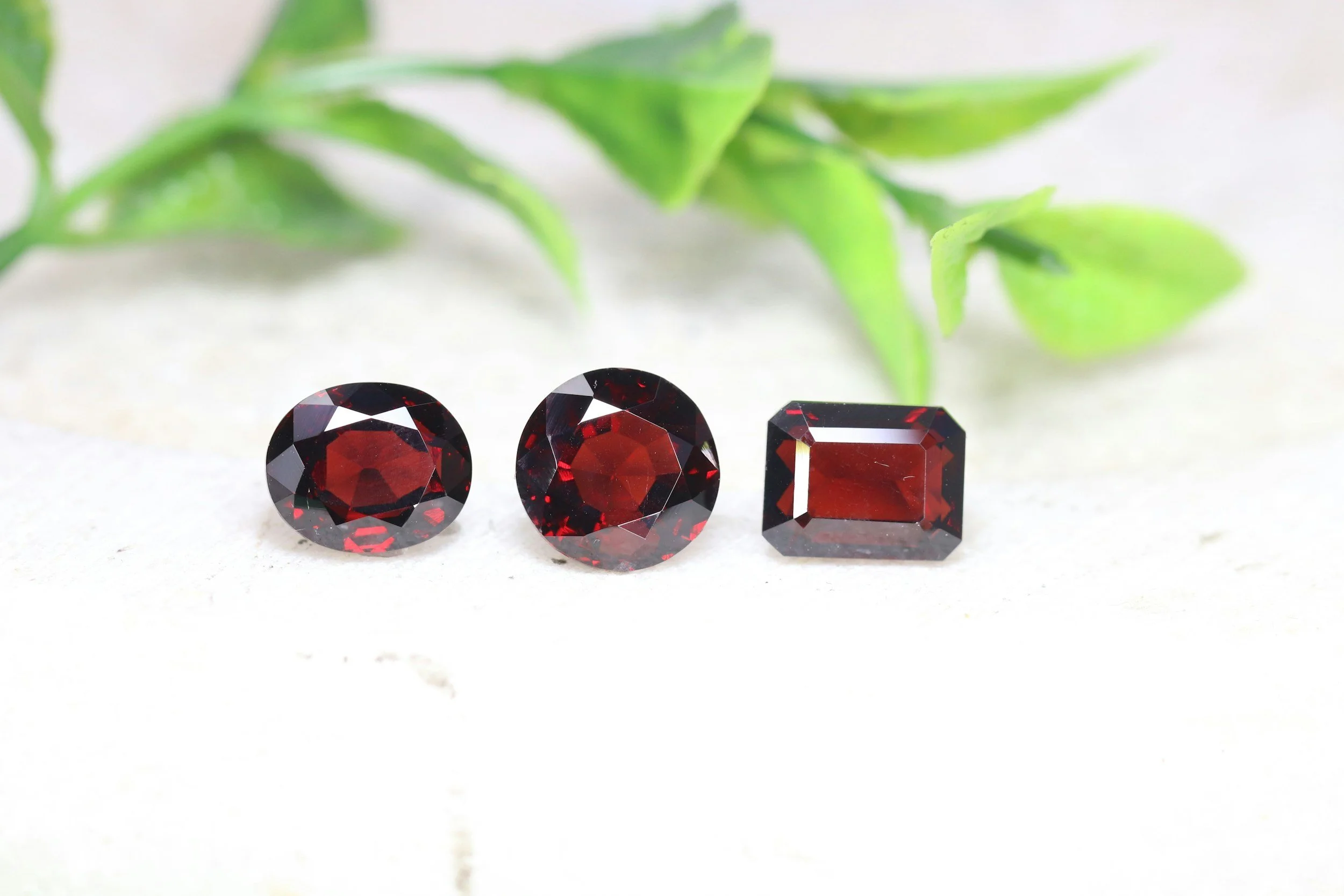
The name garnet originates from the Medieval Latin grantus, meaning pomengranite, in reference to garnet’s similarity to the fruit’s deep red color. Garnets have been used since the Bronze Age both as gemstones and as abrasives.
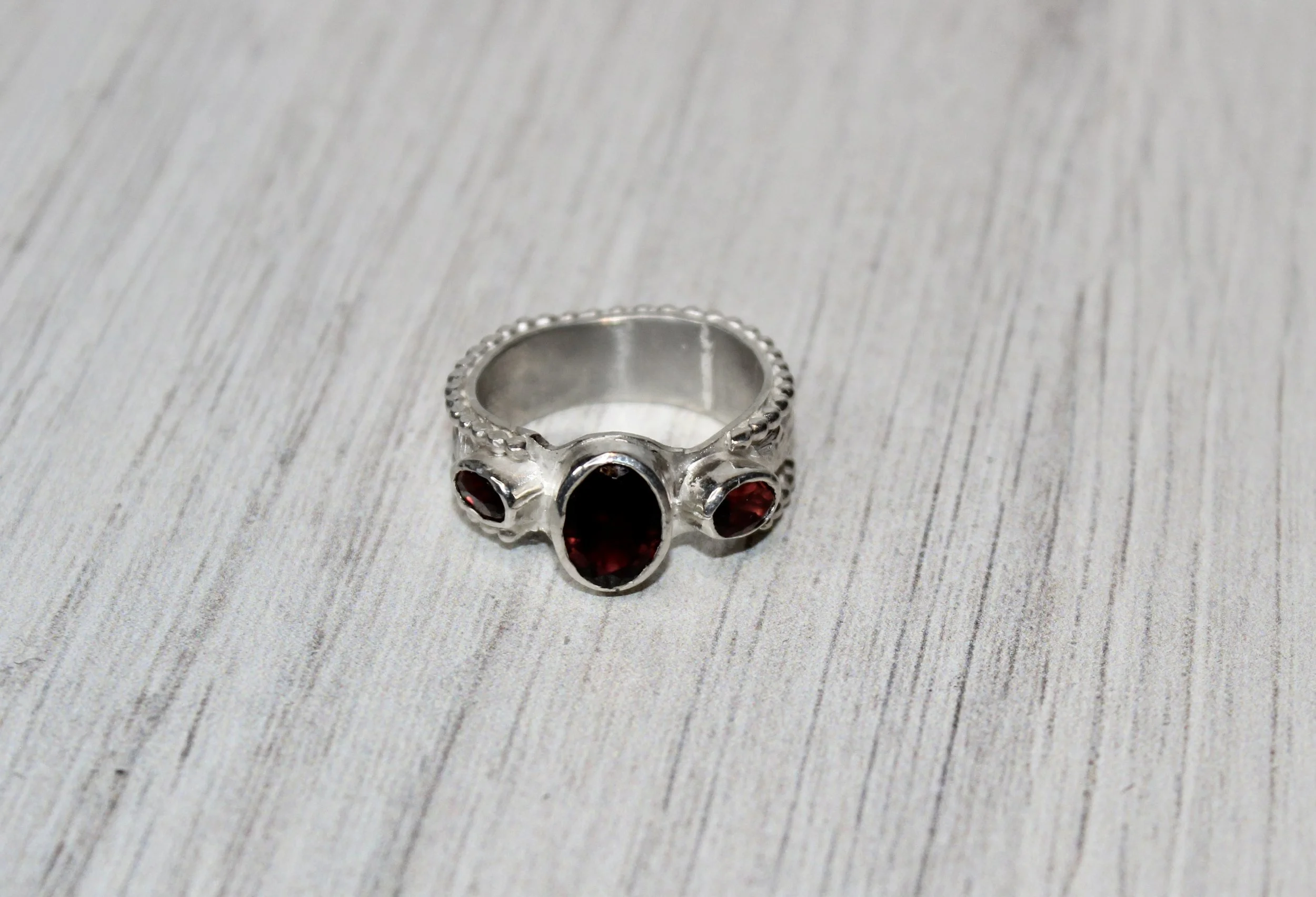
Elevate your look with the Triple Garnet Statement Ring — a bold, timeless piece crafted for confident style.
Why you’ll love it
Striking trio of rich, deep-red garnets set in a clean, modern layout that flatters every hand.
Solid 925 sterling silver band offers lasting shine and durability while keeping the design lightweight and comfortable.
Thoughtful proportions: the three stones create eye-catching presence without overwhelming your daily wardrobe.
Versatile styling: perfect as a focal piece with minimalist outfits, or layered with other rings for curated, contemporary stacks.
Hand-finished details and secure bezel settings ensure each garnet is showcased and protected.
Ideal for
Statement jewelry lovers who value craftsmanship and refined design.
Special occasions, evening looks, or to add a polished finish to everyday wear.
Gifting: arrives ready to gift for birthdays, anniversaries, or meaningful milestones.
Product highlights
Gemstone: Triple garnet cluster — deep, consistent color and excellent clarity.
Metal: 925 sterling silver, polished to a lasting shine.
Comfort fit band for wearability throughout the day.
Available in Size 9 1/4. Custom Sizes may. be available-message for details.
Make a memorable impression with the Triple Garnet Statement Ring — classic materials, contemporary attitude, unmistakable presence.
Garnet is a group made up of several minerals. Five of which are important as gems. Pyrope and Almandine range in color from purple to red. Spessartine features vivid oranges and yellows. Andradite consists of mostly yellow to green and features the rare garnet variety, demantoid. Grossular garnets feature the widest range of colors from colorless to reddish orange and the strong vibrant green of tsavorite.
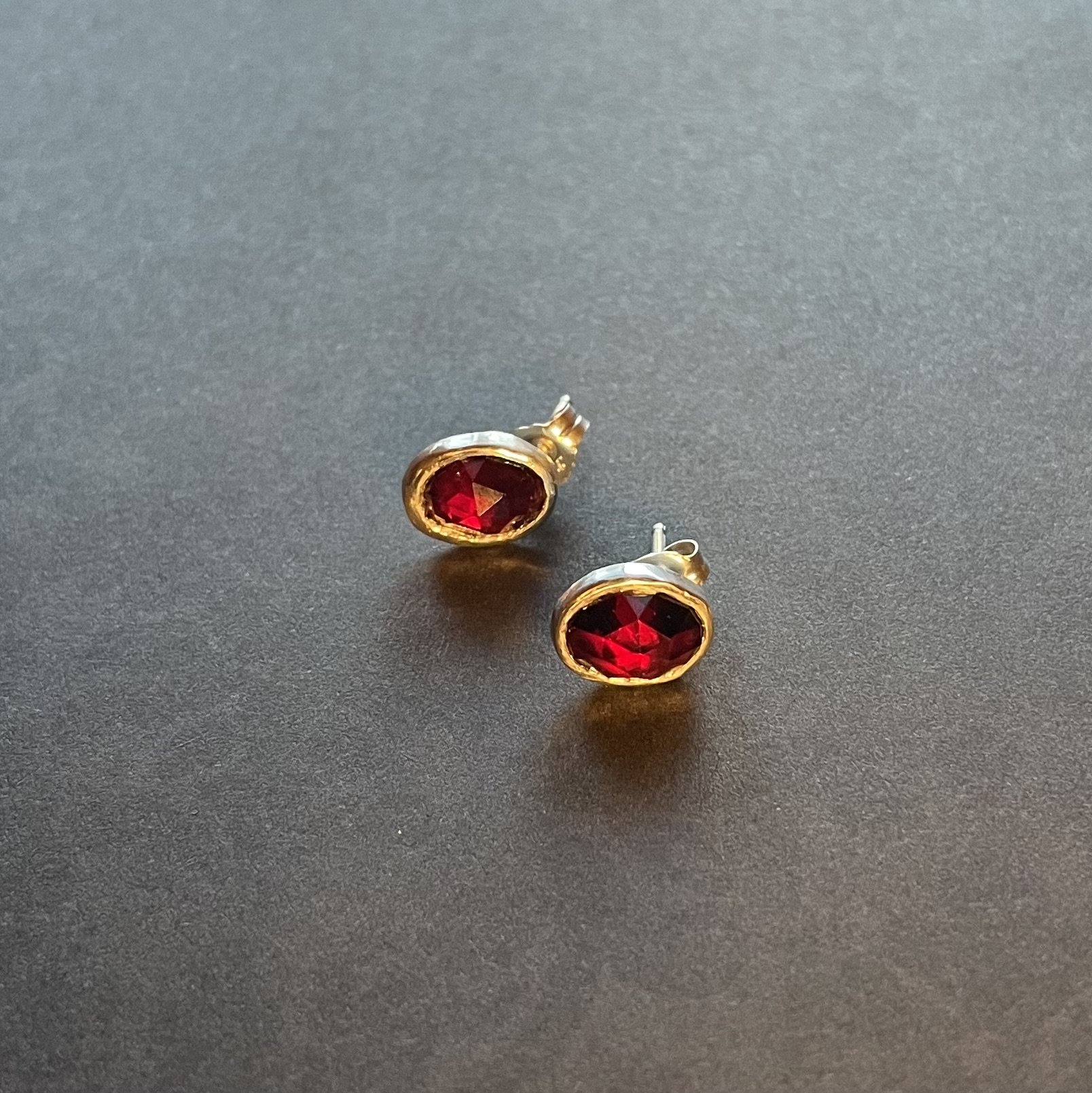
Discover the understated elegance of our Rose Cut Garnet Stud Earrings in Sterling Silver — a refined choice for everyday luxury and special moments alike.
Why you’ll love them
Timeless appeal: The rose cut gem evokes vintage charm with modern polish, offering a soft, antique-inspired sparkle that flatters every face shape.
Rich, natural color: Deep garnet hues shift from warm wine to vibrant crimson in different light, creating a captivating focal point.
Thoughtful craftsmanship: Each garnet is carefully rose-cut to maximize fire and depth while maintaining a low-domed silhouette that sits comfortably against the ear.
Quality materials: Set in durable .925 sterling silver, these studs are designed for lasting wear and easy maintenance. Secure friction backs keep them in place all day.
Versatile size: Perfectly scaled for both minimalist everyday wear and layered looks, these studs pair beautifully with casual denim or evening attire.
Perfect for gifting
A meaningful present for birthdays, anniversaries, or a “just because” surprise. Garnet symbolizes love, strength, and protection — a thoughtful gesture for someone special.
Care and wear
Clean gently with a soft cloth. Avoid harsh chemicals and store separately to prevent scratches. Sterling silver may patina over time; a quick polish restores shine.
Specifications (typical)
Gem type: Natural garnet, rose cut
Metal: .925 sterling silver
Backing: Push/fraction backs
Elevate daily elegance with a pair that balances classic design and modern wearability. Add the Rose Cut Garnet Stud Earrings in Sterling Silver to your collection for a piece that feels both personal and timeless.
Garnets are found in many different countries and regions around the world. Bohemia was the primary source of red pyrope garnets in Victorian times. Today, most of the world’s garnets are found and mined in Africa. Garnets are also found and mined in the United States, primarily in Idaho, Montana and New York; however they are also found in Arizona, Nevada, Massachusetts, Alaska and California. Idaho is famous for it’s unique star garnets, with some areas open for public digging.

Stunning fire agate that features rich red and gold tones within the stone is paired with an electric orange Spessartite garnet. This beautiful pendant features fun details with a sterling silver twist border and sterling silver beads accenting the garnet. All handmade from solid sterling silver.
This one of a kind pendant measures 1 1/2 inches long and 3/4th of an inch wide. Comes complete with an 18 inch sterling silver chain.
Most garnets range in hardness from a 6.5 to 7.5 on the Mohs Scale of Hardness, which makes them a fairly hard gem. They are more prone to chipping and damage than sapphires, rubies and diamonds, so care must be taken when wearing them, especially in rings.
Unlike a lot of gems on the market today, most garnets are not treated to enhance color. However, a treatment called fracture-filling rarely is used to improve the clarity of the gem. Treated stones require special care and should not be placed in an ultrasonic cleaner. Use of a soft brush and soapy water is definitely a safe way to clean your gems.
*Source: GIA Gem Encyclopedia.